


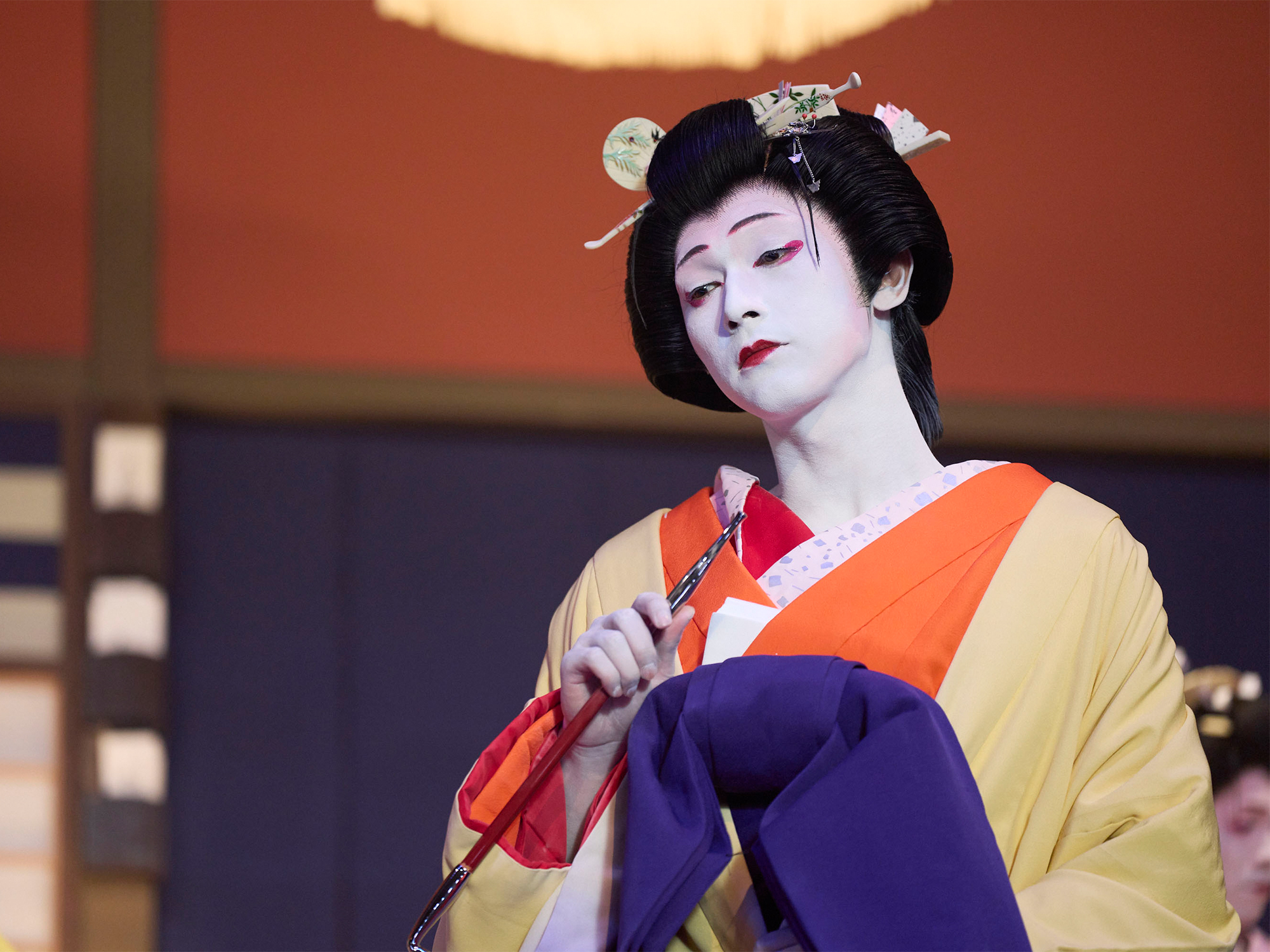
Inside a quick time of being launched to the budding kabuki performer on the centre of Lee Sang-il’s hit Japanese movie Kokuho, a character cuttingly provides an remark about his trajectory: “Your stunning face may eat you.” These phrases, paired with the jealousy-tinged gazes of everybody within the kabuki sport as Kikuo embeds himself on this realm of conventional theatre, are those who come to outline his profession as a kabuki actor.
It goes past actor Ryo Yoshizawa’s beautiful face, however the way in which he performs for each the audiences and the digicam itself, his feelings transcending the kumadori make-up these actors put on. By way of his story and all of the ways in which the folks round him search to delegitimise his work, we’re granted a glimpse of the world of kabuki and all of the drama and historical past that comes with it.
Get extra Little White Lies
Slightly than spend any of its three-hour runtime giving a crash course on the artwork of kabuki, Kokuho economically presents the fundamentals via the way in which Kikuo’s instructor, Hanjiro Hanai (performed by Ken Watanabe), provides classes to his college students, in addition to quick captions explaining the plots of particular person performances. This permits the viewer to attract their very own thematic connections to the overarching narrative. That narrative spans a long time, from the 1960s to the current day, intimately homing in on one man’s journey via the ages and all he should overcome to share his experience with the world.
In some ways, Kokuho is a classically made movement image, one that’s maybe greatest described as an interpretation of A Star Is Born. The lives and careers of the kabuki performers current – Kikuo, his rival Shunsuke (Ryusei Yokohama) and the varied previous masters whose classes typically fall on deaf ears – are what Lee is fixated on, than the artwork type itself. And whereas all of the variations on A Star’s components are tailor-made to a particular second in time, what’s most attention-grabbing about Kokuho is the way in which it trails via an prolonged interval of Japanese historical past, embedding one within the tradition with out feeling the necessity to clarify its attraction.
Satoko Okudera’s script is vulnerable to tragic beats and characters explaining their actions for audiences who seemingly can’t course of visible cues (as is the sweeping music that punctuates many a second) and sometimes feels at odds with Lee’s path. Promoting the viewers on an artwork type price sacrificing every part for is vital to this sort of movie and Lee sells it via attractive colors, and snatches of assorted productions Kikuo and Shunsuke carry out in, with its repetition of The Love Suicides at Sonezaki and The Heron Maiden being key to its emotional success.
These scenes lend a weight to every part in Kokuho, from it strategy to Kikuo’s otherness – itself grounded within the legitimacy of his lineage (not having an actor father) versus equating performing as a lady to queerness – to the fractured however compelling relationships at its core. All of the affairs, deaths, animosity and dinner theatre on this planet couldn’t cease a man like Kikuo. How he navigates all that to show himself as the best star is nothing wanting intoxicating.